
My Top 4 Impulse Control Games for Dogs
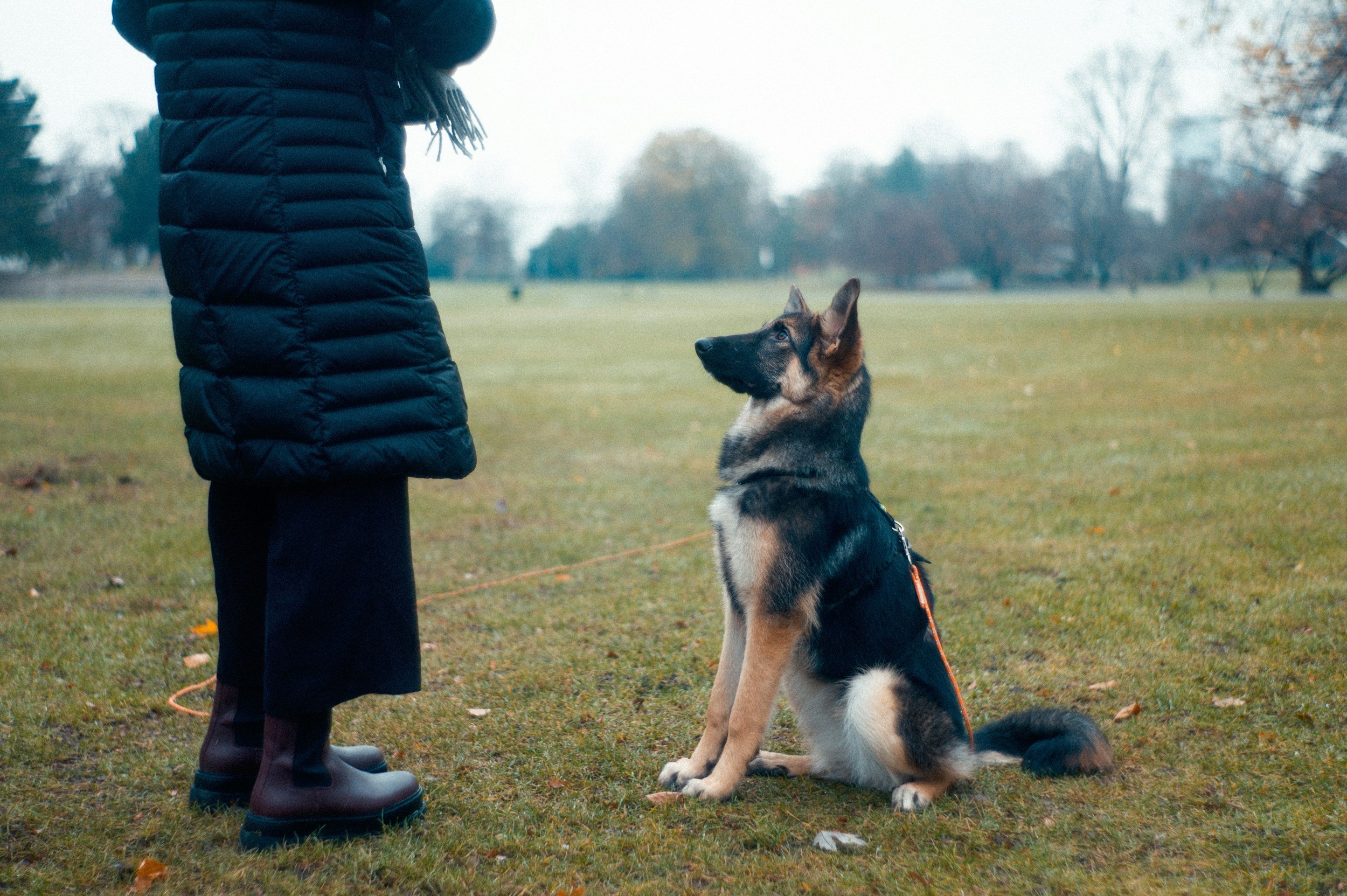
Teach your pup how to resist those automatic impulses - grab the food, mouth the leash, play with trash!
I have SO many games and exercises in my repertoire, these are some of my favorites for dogs of all ages!
I’ve been having a lot of fun training dogs of different ages lately and I wanted to share games that I love introducing to dogs of all ages to help them learn “impulse control” in lots of different contexts. Impulse control as a concept looks like SO many things – this can mean anything from keeping a slack leash when a dog has an impulse to pull to relaxing for a nail trim when the impulse is to chew on that weird nail trimmer or your hands.
This blog won’t go into extensive detail of ALL the ways you can use these games or how to make them more complex to simulate the real world – but I do want to give everyone an idea of how fun and simple beginner impulse control training can be.
4. Leave it – the Look Away style
Is this a game? It is when you make it one! I love every cue to start off as a fun game to build positive associations with the words and actions from the start.
Look Away Leave It:
Start off with something relatively low value but interesting held in one hand (like a crumpled paper towel)
Present it near but not touching your pup’s face briefly
Then use a treat in front of their nose to lure them to look away from the item
Repeat keeping it easy and fun
If your pup is easily and repeatedly looking away you can add the “Leave it” words to the moment when their head starts to look away
Take a play break! Do something different after some repetitions with a toy or sniffing, then come back and do some more rounds.
Next pause before luring and just use the words “Leave it,” if they struggle still help them out with the lure
Advancing the game: Switching which hand holds the item to leave, Placing paper towel/item on the floor but ready to cover it with your hand if this turns out to be too hard still, Dropping it but ready to cover it with your foot. If your dog is succeeding at both of these there are two possible next steps: Raising the value of the thing to leave (like food), and/or incorporating movement and walking. Movement could mean you drop and walk away and see if your dog can still leave it OR setting up a leave it with a leash on (inside) to see if your dog can generalize the words to a different set up context. Finally, the big test that may need a lot of intentional practice is practicing out in the wide world and with a variety of items!
Remember – keep it short and positive. Incorporate play breaks when possible.
I personally prefer this version – the Look-Away Leave it – over a Leave it where dog keeps staring at the thing they are leaving. This is just because it automatically helps your dog reduce how tempted they are by whatever it is. The longer a dog stares or inches closer to a thing, the more tempting it is to stick it in their mouth! That leave it is perfectly functional for many dogs, but for dogs who are already struggling with impulses – looking away is a fantastic choice that I want to encourage.
3. Its Your Choice + Slow Cookies
This one can feel a little more boring but sometimes that is great for impulse control – the lower the stimulation the more we are practicing calm. But note – this is for dogs who are already pretty confident, comfortable, and treat motivated. I would not do this game with a dog who is shying away a lot, has trouble with appetite, or exhibits resource guarding.
In this game you hold some lower value treats or kibbles in a closed fist and hold it in front of you (I often do this game sitting on the ground – your dog can be in any position).
If your dog “mugs” the hand - nudges, noses, or gently mouths - then nothing happens. I hold it closed and still.
If your dog stops touching the hand with their face then the hand begins to open – but I am still not inviting them to eat from the hand. If this opening causes immediate mugging, then close it again. But! If they continue to be patient then my other hand will take out a single treat and bring it to their mouth to eat.
And this continues until you have dispensed every treat from your hand one at a time.
Troubleshooting: If your dog is going beyond gentle mugging and is chewing or scratching at the hand then please lift it up and away to avoid further practicing this behavior. Then after a pause you can bring it back down again as long as the behavior does not continue. If this is very intense and is hurting then you may need to either use even lower value items or choose a different game to start (reach out – we can work together 😊). If your dog is struggling every single time you begin to open the hand and they seem to be getting frustrated, then I recommend doing a couple of really fast rewards with the other hand when your fingers are only partially opened to try to capture the moment they aren’t touching the hand even when the fingers moved – then see if you can switch to offering the cookies slower with the fingers all the way open.
Still too hard? Hold the hand a little further from their face either higher up or further to the side.
Too easy? Raise the value of your treats! Switch positions or hold the closed hand closer to the ground or closer to your dog and see if they can still be successful.
This is a great game for helping pups be patient around food in hands and teaching them that great things will happen without mouthing and mugging the person. As a bonus if you would like to teach a cue that indicates when your dog is allowed to take something from your hand, you can incorporate it into this game – say the cue, like “Take it” or “Get it” when you are offering the treat with the other hand for them to eat.
2. Playful Premack - Get it, Drop, Leave or Wait
“Get it” is actually one of my favorite things to teach because for some dogs it is even more rewarding than a treat on its own. When I am using a “Get it” cue in an impulse control context, I am often using what is called the Premack Principle. This is when I reward a less probable activity (or less fun activity) with a higher probably activity (or a more fun activity). I’m not going to go down the rabbit hole in this blog of picking apart and analyzing this principle – I may do that down the road. But to use this game as an example – I may ask a dog to “leave it” or “wait” while I walk around with a tug toy and then as a reward for that behavior I say “Get it” and invite them to play tug. Rewarding that impulse control with a thing they want to do is a fantastic way to strengthen the meaning of your cues and show that it doesn’t have to be boring to listen to cues!
How you play the whole sequence of this game depends on your dog’s familiarity and ability with cues, level of treat vs. toy and play motivation, and current responses when excited or overstimulated. If your dog is extremely food motivated and will refuse to play when any food is available then you might play this game with 2 toys instead of any food.
The Basic Get it/Drop it/Leave it Game:
Say "Get it" and present the toy for play, play for a bit.
Say "Drop it" and offer treats to the side. If your dog lets go and goes for the treats praise and gently pick up the toy out of reach.
(If your dog knows drop it super well, you can wait to give a treat until they let go – this is for puppies or dogs who are struggling with this cue.)
If your dog is still tugging the toy and won't let go for a treat, first try to offer more than one treat (2 treats? 3 treats? 4 treats? etc.)
If more treats are not helping and your dog is tugging the toy or playing keep away, stop tugging or chasing to indicate you are not playing the game anymore. If they then come back, try "Drop it" and treats again
When your dog is being polite (4 paws on the ground) say "Get it" and present the toy for play again
Use your words so that your dog can start to learn cues for when they are allowed to get something.
Advancing the game: If your dog is doing great with these 2 cues already, I also like to incorporate either some “Leave it” or “Wait” practice. This can be “leave it” while I move the toy around the dog gently or “wait” while I walk around the space swinging the rope toy (this is super advanced, don’t go right to this version with puppies or dogs new to the game).
I think this is the most enjoyable impulse control game. I get to play while also getting some awesome polite responses from dogs – and they have a blast too! The next game is my number 1, but it is on the lower stimulation end rather than the fun end.
1. The Bucket Game (credit Chirag Patel)
This game always blows me away. I do it with almost every dog I train with, but it still makes me so happy every time a dog is able to communicate and then OPT IN to things that would be so hard otherwise. I first learned this game from watching a video by Chirag Patel and I modified it to work with a Green winged macaw, Mac, at Smithsonian’s National Zoo. Mac was not comfortable with hands and handling of ANY KIND. I could give him a treat with my hands, but if my hand lingered near him for any amount of time there was a chance he would go for it. I never advanced to full handling before Mac moved to another zoo, but I was able to feel safe with my hands moving around him and did some minor, voluntary nail and feather care – things that were never on the table when I first met him. For dogs – I have seen dogs go from “I’m gonna eat that nail trimmer and your hands” to being able to take a break, walk away, then come back to opt in and voluntarily allow their nails to be trimmed.
My explanation of the Bucket Game with a Mat (mat optional):
Put treats in your “bucket”/Tupperware/bowl. Place a Mat where you want to work and sit in front of it.
Hold your bucket up encouraging your pup to sit or down (without saying any words). Then say “yes” or clicker click and give a single treat from the bucket
Slowly move the bucket down as if on rungs of a ladder and at each rung if your dog stays in a sit or a down and does not try to get into the bucket: "yes" and treat.
If your dog gets up or goes for the bucket just lift it up until they easily go back into the sit/down: Butt up, bowl up.
Work the bucket down in this way to the ground and continue to say "yes" and treat each time you lower the bucket and pup remains in their position.
Once the bucket is on the ground you can work on moving hands and work up to more intense steps, do each step a few times:
Start by moving one hand in a brief motion: "yes" and treat
Move the hand toward your dog without actually touching: “yes” and treat
Touching pup’s back in a long soft pet: "yes" and treat
You can do each of these steps multiple times in a row until your dog really seems comfortable with it, then move on to the next level of intensity.
If your pup flinches, shies away, or avoids the touch, make it easier again or encourage them to take a break walking around the room and then come back and try again. You want them to opt in and have all good experiences with touch and this game right now.
If your dog gets up and it is not easy for them to return to the game, take a break.
If your pup is tolerating the previous steps well and is easily opting in to the game:
Touching head or back: "yes" and treat
Touching paws: "yes" and treat
Holding paw briefly: "yes" and treat
Touching an ear: "yes" and treat
Picking up an ear: "yes" and treat
Your next step could be introducing anything you might use on them like a nail trimmer or a brush, start easy by just showing the item, then putting it behind you again: "yes" and treat
You can move the item closer and touching them if they are still calm about it
Ultimate goal: Laying on the mat OR sitting/laying while looking at the bucket if you are not using a mat is your dog’s cue or communication that they are ready for the game to continue. Standing up or moving away is your dog’s communication that they need a break from the game. This gives your dog choice – treats for touch or space and pause.
I have first-hand seen how giving a dog this framework for predictability and communication significantly reduced the anxiety that dog experiences around hands, handling, grooming tools, and medical equipment.
It may not feel as exciting, but wow this game has changed my life and the lives many dogs and people I have worked with. If you want a more tailored version of this game for you and your dog – feel welcome to schedule a training session with me here: https://www.petpositivetraining.com/training-services
Impulse control encompasses SO many different behaviors and expectations we have of our dogs. Even if one of these games doesn’t directly relate to the biggest impulse control issue you are having – practicing small versions of patience to start will help your dog begin to understand how to control their automatic impulses at all. Let me know if you’ve tried any of these games our or if you have a favorite impulse control exercise!