
Scratchboard - Dog Nail Trim Solution!
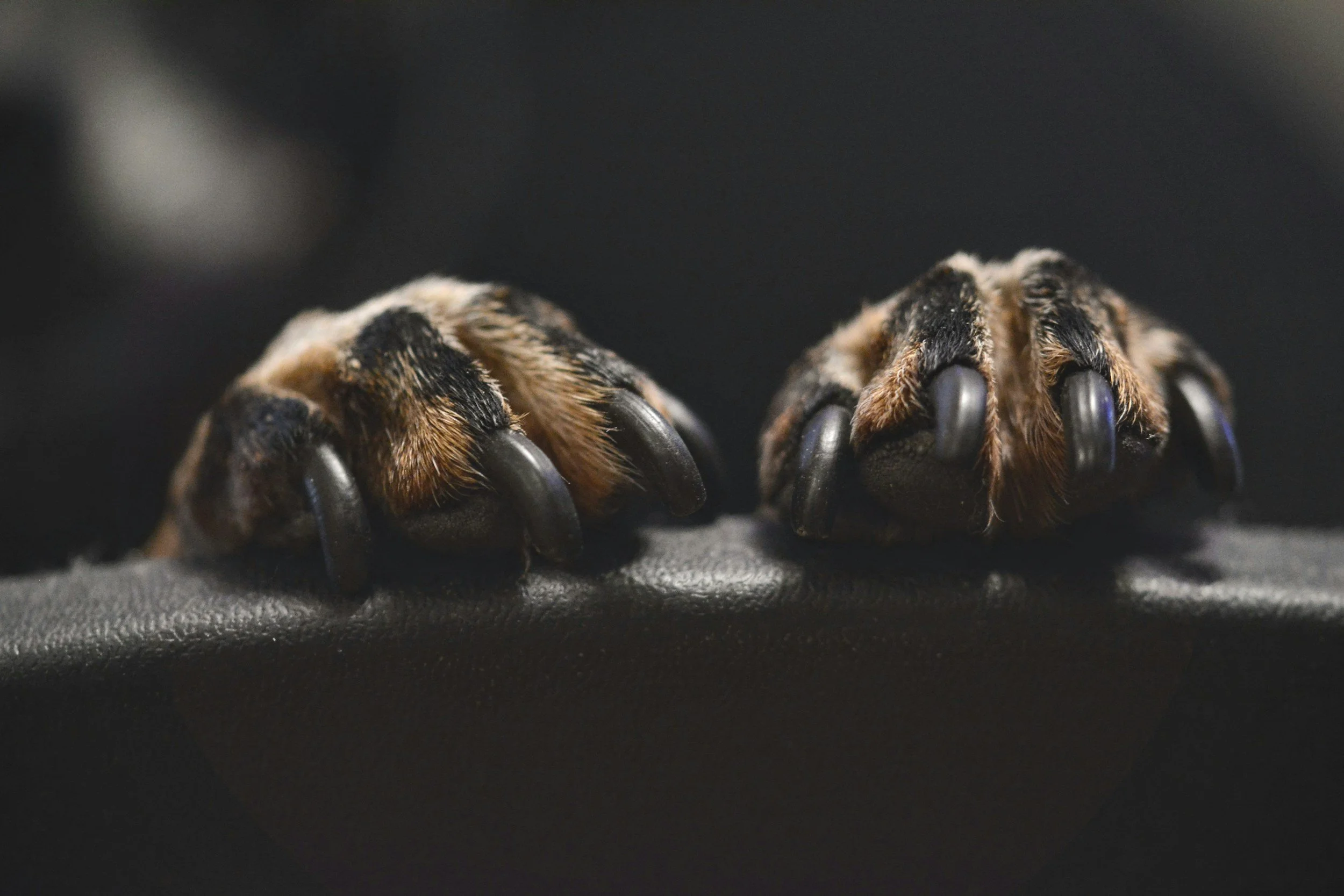
Let me tell you the wonders of the scratchboard today!
If you haven’t heard of a dog scratchboard - I highly recommend it as a trainer who owns a pup with very sensitive nails.
Two blog posts ago I listed my top 4 impulse control games and one of them was the Bucket Game from Chirag Patel which I use most often for voluntary grooming and nail trims. It can be used for a bunch of different things including just getting used to human hands at all - but getting voluntary nail trims via the Bucket Game feels like magic (aka functional and effective communication between dog and human with choice and agency).
When the Trainer Couldn’t Do Bucket Game With Their Own Dog
I encountered this game pretty early in my training career and have used it and modified versions of it with a massive number of clients and even one very special Green Winged Macaw while I was working at Smithsonian’s National Zoo. Almost every time I use this game I see some amazing results. And then I got my own very special dog Gracie and was soooo excited to work on the voluntary care that I love so much! She gets how the bucket game works - I can use it for voluntary ear handling and cleaning - but touching her paws during this game is an automatic game over move. She will leave the game and choose not to return - and this is still true after years of building our trust and mechanics together. I have now met more dogs where this feels like the case - even if they have worked toward voluntary grooming from puppyhood, some very sensitive dogs do not feel comfortable with clippers or dremels and I’m not sure they ever will.
Problem Solved - Scratchboard!
So what do we do? I will admit that sometimes I do handle my dog for involuntary nail trims - but I really only do this when absolutely necessary. But what I do most often and what I recommend to those of you who also have dogs who just cannot tolerate nail trimming: use a scratchboard!
You can buy scratchboards online or you can DIY make a scratchboard at home. There are tons of shapes, sizes, and styles but ultimately it is a board with a rough, scratchy, sandpapery surface. The idea is simple - your dog scratches their own nails on the board which grinds down their nails naturally. Bonus? There is way less chance of your dog quicking themself compared to us clipping their nails. You generally have to teach a dog how to use a scratchboard. Though, there are some scratchboards that have little treat compartments, and some very motivated dogs only need this temptation to go to town scratching, at least with their front paws.
Start Teaching Your Dog to Use a Scratchboard
So how do I start teaching a dog how to use a scratchboard? Especially for dogs who have already shown paw and nail sensitivity I start by teaching them how to scratch a towel on cue or a board with a carpet/soft surface. This way we get the behavior super solid before introducing any uncomfortable sensations that the scratchboard might cause.
Simple front paw start: Show your dog a high value treat and roll it in the very top of the towel but then hold it down with the rest of the towel laid out in front of this part. The moment your dog uses their foot at all to try to get that treat “Yes!” tell them they did the right thing and immediately give them a high value treat (this can be the one from the towel or a different one - whichever is faster). Then continue. Eventually you want to work up to multiple scratches and even multiple scratches with both paws for the treats. You can choose to add a “Scratch” cue once you have the behavior you are aiming for - but this is completely optional. You can instead just work on the scratchboard itself being the “cue” for what behavior you are asking for. To transfer this front paw scratching from the towel to the board I usually start by draping the towel over the whole board and slowly moving the towel so that less and less of the towel is on the board until eventually they are no scratching the towel at all, but the board. For some dogs this transition may be pretty simple, and some who find the scratchboard sensation uncomfortable may need lots of gradual practice. For sensitive dogs it may also make sense to either start with a finer grit board or have a board with 2 sides and start with the finer grit side before working on the coarser grit side.
And Now the Back Paws
Hooray front paws scratching and self-maintaining nails in a fully voluntary fear-free way! And then we come to the back feet. I have limited personal experience with working on the back feet because Gracie is a dog who still doesn’t love the scratchboard sensation - she knows the cue scratch and will offer it on any rug or towel, but hesitates with the scratchboard - we are working on it <3. However, I do understand the mechanics of 2 options for teaching the back foot scratching.
Capture the behavior when your dog offers it on the grass (like after going to the bathroom). How? Always have treats on you when you are outside with your dog. Every time they scratch those back feet say “Scratch! Yes!” and give a little treat party. Repeat… a lot! And after a lot of repetition see if they offer that scratch a second time and/or if you can ask for it - and throw more treat parties! Then work on asking for it on a targeted spot (like a towel) and transition that target to the scratchboard.
Lure the behavior by encouraging them to lift their feet to touch the board as if they are about to climb. This might sound odd or hard, but I think it is actually probably easier than the other method partially because you can do it in a planned session rather than trying to capture it randomly. Prop a board (either a soft-surfaced board or the scratchboard with a thick towel over the surface) leaned securely against something like a couch, ottoman, or chair - or for very short dogs a small stool or platform. Use a treat to lure them to put their front paws onto the item (couch, chair, stool, platform) so that their belly is over the board and their back paws are still on the floor. Then slowly and carefully lure them slightly forward so that they begin to lift one of their back paws to reach a little further or begin to climb up - and the moment that paw lifts “Yes!” and treat then start over so the paw is back on the floor and try to get that paw lift again as well as touch the board with the nails if they aren’t doing it already. You can slightly change the direction of the lure a little left or right to try to encourage each foot at a time. Continue this until you are consistently getting paws touching the board and potentially putting a little pressure on and sliding down - tada! We have back foot scratching on the scratchboard. Similarly this could be put on cue or the sight of the scratchboard leaned in this way could be the cue on its own.
It’s a Process- One I think is worth it for dog happiness
As I mentioned, I am still on my own scratchboard journey with Gracie, but I have seen scratchboards improve so many dogs' lives. If you haven’t heard of it - check it out! There are some great youtube videos if you want to watch other people do this kind of training. Some dogs will tolerate nail trims but absolutely hate it - as much as possible I want to help dogs and their people have easier and happier lives together and taking one point of discomfort or triggering off the stack of discomforts can make a big difference! So even if your dog is “fine” I encourage you to explore if this would be easier for you and your pup in the long run.
Want one-on-one help teaching your dog how to use a scratchboard? You can work with me! Sign up on my Other Training Services Page.
Happy Training!
